I love Halloween. I get such a kick out of seeing some of the imaginative costumes people create. My favorite Halloween experience was years ago, when I was living and traveling in my motorhome, and I met up with some traveling friends in New Orleans. Talk about creative costumes! A pair of table lamps, a human pin cushion, a Trouble game, and a couple of sausage pizzas were among the standouts.
Something that really stands out in my author interview this week is the number of genres Karen McCullough’s books encompass. She writes something for everyone, so enjoy the interview!
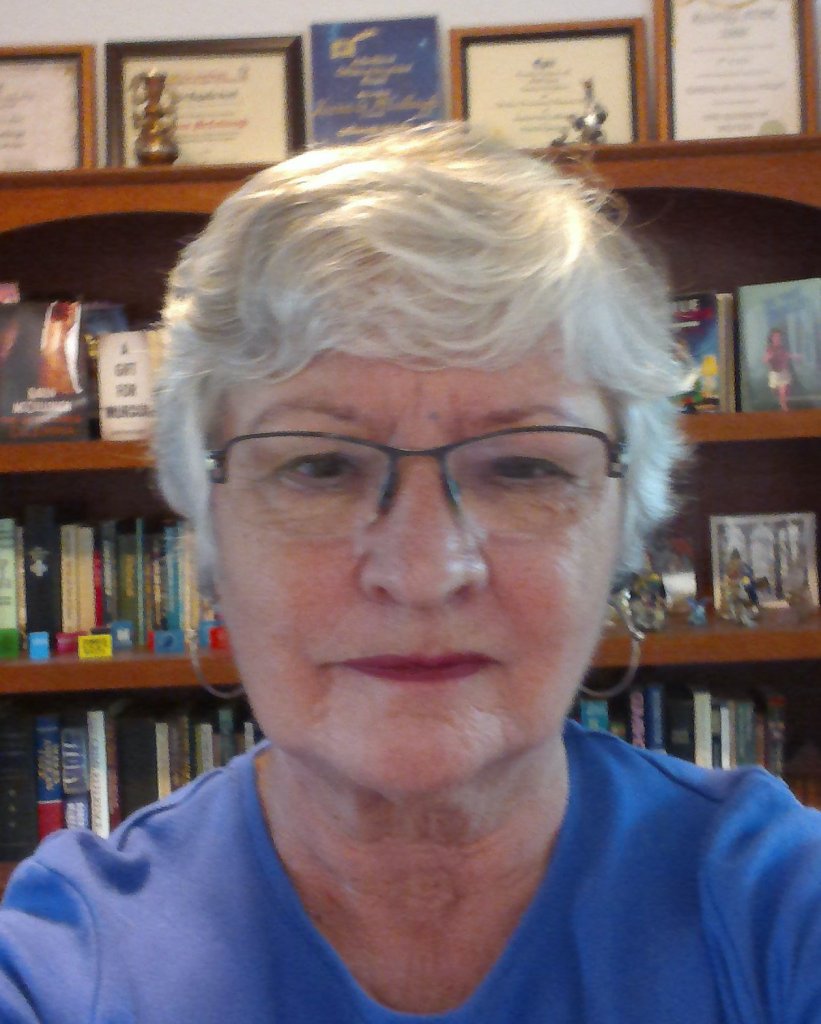
About the Author
Karen McCullough is the author of almost two dozen published novels and novellas in the mystery, romance, suspense, and fantasy genres, including the Market Center Mysteries Series, originally published by Five Star/Cengage and reprinted by Harlequin Worldwide Mystery Library, and three books in the No Brides Club series. A member of Mystery Writers of America, Sisters in Crime, and the Short Mystery Fiction Society, she is also a past president of the Southeast chapter of Mystery Writers of America and served on the MWA national board. Karen has won numerous awards, including the 2021 Bould Awards, an Eppie Award for fantasy, and has also been a finalist in the Daphne, Prism, Dream Realm, International Digital, Lories, and Vixen Award contests.
Karen’s short fiction has appeared in a wide variety of anthologies. More information is available at her website: https://kmccullough.com/.
Interview
Who or what inspires you to write?
The characters in my head are constantly knocking on the inside of my skull and insisting that I tell their stories. If I go too long without writing, I start to feel like my brain is going to explode from the pressure of these characters’ demands! I don’t need inspiration. I have to write!
It certainly sounds like your characters demand to be heard. What is the best thing that has happened because of your writing?
Meeting all the wonderful people in the writing and publishing world. Some of them have become good friends. And getting to talk with lots of other people who love reading great stories! (Winning a few awards has been really nice too!)
Those are all great rewards. What is the most difficult thing you have experienced about writing or publishing?
It’s a long list, making it hard to pick just one thing. Rejections, contest losses, publishers disappearing, bad reviews can all be hard to take. When someone asks what advice I’d give to beginning writers, I always suggest that if they’re serious about making a career of being an author, they’ll need to grow a thick skin.
Beyond that though, if there’s one thing I dislike about the current state of the publishing industry, it’s the need for authors to do constant marketing. I’m not good at it and I begrudge the time I spend doing it rather than actually writing. Social media is not my natural habitat.
I think most—if not all—authors would agree with you on the marketing thing. It can be exhausting and overwhelming. Was there anything you didn’t do during your writing or publishing journey that you wish you had?
I don’t really know if I could have done this, but I wish I had at least tried to write more consistently within one genre. My mind seems to flip and skip around and doesn’t like to be limited by genre considerations, so I have published novels that are classified as mystery, romance, fantasy, paranormal, and suspense. Some of my novels cross a number of genres. It’s not a great recipe for long-term career success and makes it hard to work up any kind of author branding.
I can see how writing across multiple genres could be a challenge when it comes to building a brand and audience, but it seems like you’ve pulled it off. I know you have had some publishers, and possibly some agents. Can you tell us about your experience with publishing?
During the more than thirty years of my career as a published author, I’ve had two agents (I had to fire one and one decided to leave the agenting business) and multiple publishers. My first four novels were published by Avalon Books, but then the editor there left and the new one didn’t like my writing as much. (It’s an old story and a lot of authors have had this happen.) Through the years I’ve been published by multiple small and medium press publishers and some bigger ones. I’ve also had a number of publishers go out of business and leave my books orphaned.
I’m now a hybrid author. I currently still have several books that are with publishers (Kensington and ImaJinn Books) and my Market Center Mysteries have had mass market paperback editions released by Harlequin’s Worldwide Mystery Library (WWML). The WWML edition of Playing at Murder is due out next year.
In recent years, I’ve been collecting rights to older novels and republishing them myself, and I’ve also put out a few new books that are completely independently published. I like being able to put out some books myself, including some of those novels that could never sell to a major publisher since they don’t fit into any neat marketing categories.
It’s so interesting that you have tried all three routes to publishing: traditional, hybrid, and independent. I bet you’re an expert on the pros and cons of each. In which genre(s) do you prefer to write, and why?
I grew up reading through my Dad’s library which included fantasy, mystery, science fiction, action/adventure, and even some romance novels. So naturally when I started to write, I tried out all of those genres. My most recent published novels have been either mystery or romance (which usually contain a mystery story), but I also have two published fantasy romance novels, several romantic suspense, and a couple of paranormal thrillers. Many of my stories combine genres. The Wizard’s Shield, which sounds like it should be pure fantasy, actually combines contemporary urban fantasy with romance, mystery, and adventure.
Your ability to write across so many different genres is impressive! Do you outline your books before you write them?
No, I’m mostly a pantser. I tend to start a book with a pretty good idea of how it starts and a vague idea of where I want it to end up. Generally, I write the first few chapters fairly quickly until I get to a point where the plot complications start to set in. At that point, I’ll sit down with a pen and paper and make lists of things I think could happen in the story, bits of dialogue that strike me, characters—just a jumble of things that will eventually sort themselves into a direction for the story and some knowledge of what might happen. I still have to make a lot of decisions as I go along, which is why the first half of a book always takes me twice as long to write as the second half.
Your writing process sounds so appealing to me, because I’m also a pantser at heart. Clearly, being a pantser is successful for you, with all of your published books. How do you define success as a writer?
How I define success has changed over the years. When I first started writing (about the time dinosaurs roamed the earth), the goal was to get a book published. It took six completed novels before I saw that happen. I had a few weeks or months when I felt like I’d made it. Then it was about the second book, third book, etc. With a few published novels under my belt, I hoped to win a couple of awards, make a bestseller list, become a household name, etc.
So. .. I have won a few awards and I’ve made one minor bestseller list (on Amazon). After all these years, though, my idea of success is considerably different from what it used to be. Success now is simply writing stories I want to tell and doing it in a way that satisfies my soul. If other people enjoy those stories as well, that’s even more satisfying, but I’m no longer trying to write what any publishers or editors particularly want.
It makes sense that your idea of success changes as you progress in your career, which I think is true for many authors. If you could have lunch with any author, who would it be?
Strange as this may sound, I’d love to sit down with Nora Roberts and discuss how she manages to write so many books and do it so well. What is her secret for being able to produce so many good stories?
Nora Roberts has to be one of the most prolific authors out there. Her career has been a grand adventure. Tell us about a great adventure you’ve had.
In the summer before Covid hit, I made two vacation trips overseas and both were grand. In June, 2019, my daughter and I took a trip to Greece, spending a few days exploring Athens, getting to the Acropolis, Monasteraki Square, and the Athens Historical Museum. We made a day trip to Delphi. Then we headed to Santorini, where we scooted all over the island in a four-wheeler, explored the cities of Oia, Fira, and Imerovigli, visited the archaeological site at Thera and the black-sand beach at Perissa, did a dinner cruise around the island, tried a wine tasting, had great food at several local eateries, and watched a spectacular sunset from a pool bar in the town of Oia.
A couple of months later, my husband and I joined our son and his family in the town of Keswick in the Lake District of England. We rambled into many corners of the area, visiting a standing stone circle on a hilltop, wandering past sheep and donkeys and along a beautiful river. We also enjoyed a boat excursion on the Derwentwater, dining at various pubs and cafés, having coffee and cake, and exploring the Derwent Pencil Factory and Museum.
Since Covid basically put a stop to travel for a couple of years, I’m especially glad I managed to do both of those great trips.
Your travel adventures sound fantastic! Greece is near the top of my travel list, and your description of your trip makes me want to go even more. Karen, thank you so much for spending time with us and sharing your experiences.
Readers, you can find out more about Karen and her books at her website, https://kmccullough.com/.
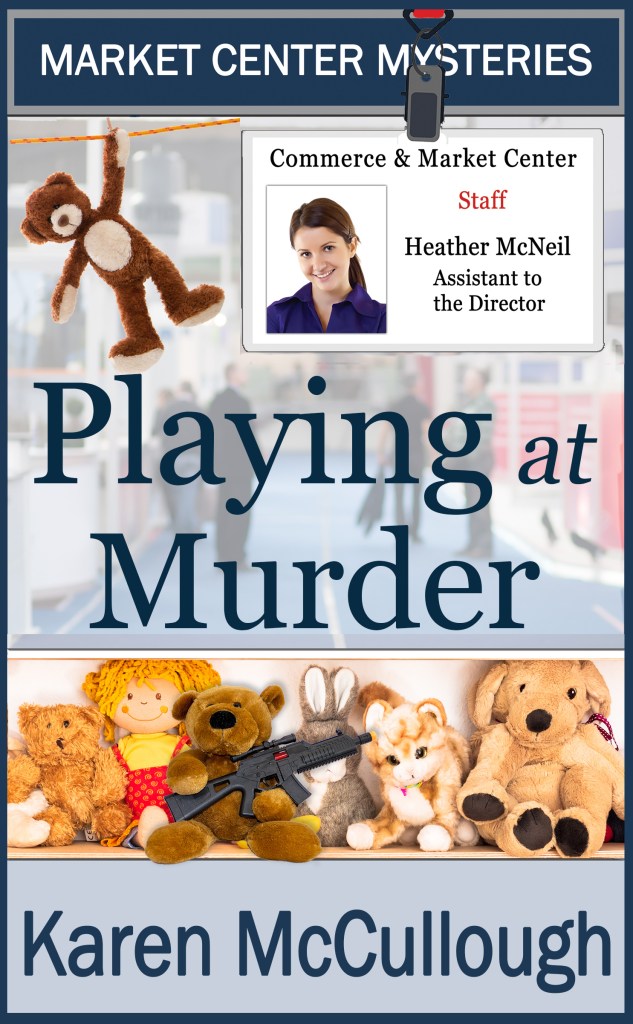
When murder crashes the Games and Playthings Exhibition, someone’s not toying around.
Dolls, construction sets, stuffed animals, craft kits, and more are the featured displays in the annual Games and Playthings Trade Show at the Washington DC Commerce and Market Center, where vendors seek to convince retail buyers to stock their products. Murder and destruction aren’t supposed to be on the program.
The hit-and-run death of an exhibitor overshadows what should be a fun few days of giveaways, games, and demos. A gun hidden in a bin of stuffed animals, a damaged show car, and a drone knocking over the PlayBlox displays are the opening salvos of chaos created by a clever but unhinged vandal.
Settling disputes and fielding complaints are all in a day’s work for Heather McNeil, assistant to the director of the Market Center. Sussing out murder suspects to help the police is way beyond her job description, especially while trying to corner a vandal before the damage gets worse. Keeping the show running despite the mayhem will pit her and her allies, particularly Scott Brandon, the Center’s handsome but enigmatic security officer, against someone playing a deadly game.
Readers, what’s your favorite genre? Let us know in the comments!


Heidi, thank you for inviting me to visit with you on your blog!
LikeLiked by 1 person
Karen, it was a delight to have you on the blog! Someone who posted a comment is interested in your thoughts about the pros and cons of the various ways to publish: traditional, hybrid, and self-publishing. Care to share your thoughts about that?
LikeLike
Another great interview, Heidi. I’d love to hear more about her experiences in publishing, specifically the pros and cons of traditional versus hybrid and self-publishing. Would you consider doing a follow-up interview with her?
LikeLike
Ginny, thanks for the comment, I’m glad you enjoyed the interview. My author interview schedule is already fully booked into next year, but maybe Karen is willing to talk about the pros and cons of the various ways to publish in the comments. I’m sure you’re not the only one curious about that.
LikeLike
HI Ginny —
I think I could write another several posts on that subject. Let me see if I can do a brief summary (being brief isn’t really my strongest skill, but I’ll try) of the biggest pro and con of each. With traditional publishing the biggest pro is that you don’t have to worry about production or distribution, while the biggest con is you have very little control over the whole process (you may not like the changes an editor makes, release timing may be terrible, or the cover art can be…not at all what you envisioned and there’s not much you can do about it. Self-publishing comes with the pro that you are in complete control of the process. You arrange for the editing, cover art, formatting, and decide when and how to publish. The downside of self-publishing is that you have to do it all yourself, including overseeing all the production and marketing. Hybrid basically means living in a world where you do some of it yourself and let others do some of it for you. For me it comes down to the books. Since I write in different genres, some of them are more suited to more traditional publishing while I can self-publish the books that I know more traditional publishers won’t take. That’s important to me because I tend to mix genres quite a bit and produce some books that simply don’t slot neatly into any neat marketing categories. I hope this helps a little bit.
LikeLiked by 1 person
Thanks, Karen! I’m writing a true crime historical murder mystery. Any suggestions on how to get it published?
LikeLiked by 1 person
Karen, thanks for providing this insight into the pros and cons of various publishing methods. I would add another pro to self-publishing, since I participated in a panel of authors representing the different publishing methods. Unless you are a best-selling author getting a large advance from a publisher, you have the potential to make more money with self-publishing by getting more in royalties and doing some of the work yourself. Small publishers often don’t pay much of an advance unless you’re well-known, and I know of multiple authors who went from traditional publishing to self-publishing and said they made more money that way. I know many authors aren’t in it for the money, but it’s a consideration for some. Of course, much depends on the quality of the book and the marketing efforts of the author. Typically, self-published authors keep more of the royalties on book sales than traditionally published authors.
LikeLike
Hi Ginny —
It really depends on whether you want to go the traditional route or self-publish. In either case, the Internet has tons of resources on how to go about it. First thing, though, is finish the book, and get it critiqued and/or edited until it’s as clean as you can get it. Then there are a lot of organizations that provide resources to help in the process, groups like Mystery Writers of America, Sisters in Crime, Savvy Authors, etc. I strongly suggest joining a couple. For a true crime historical mystery, Sister in Crime’s Guppy group might be a great place to start.
LikeLiked by 1 person
It really depends on whether you want to go the traditional route or self-publish. In either case, the Internet has tons of resources on how to go about it. First thing, though, is finish the book, and get it critiqued and/or edited until it’s as clean as you can get it. Then there are a lot of organizations that provide resources to help in the process, groups like Mystery Writers of America, Sisters in Crime, Savvy Authors, etc. I strongly suggest joining a couple. For a true crime historical mystery, Sister in Crime’s Guppy group might be a great place to start.
LikeLiked by 1 person
Great interview, Karen. I really enjoyed reading it.
LikeLiked by 1 person